
Reception at Dean Field School
Our Dingley’s Promise Mark of Achievement Award reflects our commitment to creating a safe, inclusive and supportive environment where every child can thrive, build confidence and feel valued.
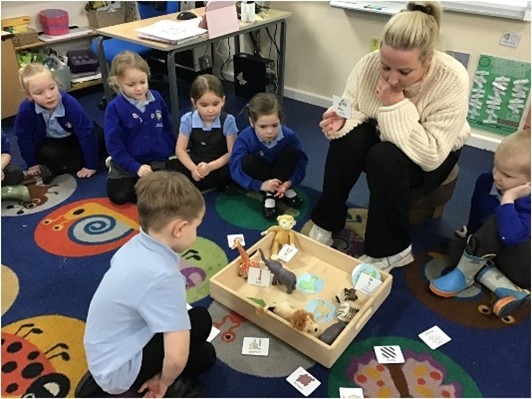
Please find our yearly and termly overviews here:
Yearly overview
Half termly overview
An Exciting Start to “Learning Without Limits”
Reception marks the beginning of every child’s school journey at Dean Field and we are passionate about giving each child the very best start to their education. Our Reception year follows the Statutory Early Years Foundation Stage (EYFS) Framework (2025) building directly on the learning and development that takes place in Nursery and ensuring continuity, care and high expectations for all children.
Our experienced and enthusiastic team create a safe, nurturing and stimulating environment where children are encouraged to explore, imagine, problem-solve and grow in confidence. Learning is carefully planned to be engaging and hands-on supporting development across the seven areas of learning while recognising that every child develops at their own pace. Through personalised next steps and appropriate challenge, children are supported to reach their full potential.
EYFS plays a central role within our School Improvement Plan, reflecting its importance within our whole-school vision. Our EYFS curriculum is designed to develop confident, resilient and joyful learners, embedding strong foundations in communication, early reading, writing, maths and personal development. These foundations prepare children for Year 1 and the wider National Curriculum, including subjects.
In Reception, we continue to build upon the strong progress made in Nursery. Using assessment, we identify strengths and any gaps in learning and provide targeted support where needed. Children are supported to work towards achieving the Early Learning Goals (ELGs) by the end of Reception, while also developing independence, confidence and positive learning behaviours.
EYFS: A Strong Start
EYFS is the foundation of all future learning. Our curriculum nurtures happy, curious learners and equips children with the key skills, knowledge and attitudes they need to succeed throughout their time at school and beyond.
The EYFS Framework
The EYFS Framework explains how and what your child will be learning to support their healthy development from birth to 5 years.
The full document can be found at:
https://www.gov.uk/government/publications/early-years-foundation-stage-framework–2
We use Development Matters to support our EYFS curriculum and teaching. It helps us understand how children typically develop and ensures learning is carefully planned to build strong foundations in communication, early reading, writing and maths preparing children for Year 1 and future learning.
The full document can be found at:
The 17 areas of learning and development:
Your child will be learning skills, acquiring new knowledge and demonstrating their understanding through 17 areas of learning and developing which come under the 7 different educational programmes as listed below:
Communication and Language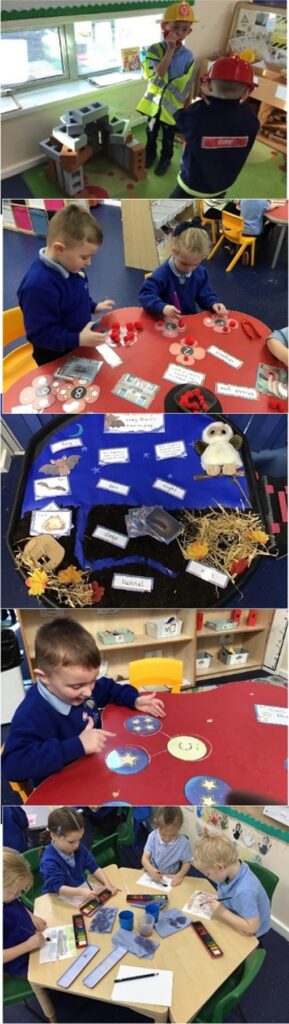
- Listening, Attention and Understanding
- Speaking
Personal, Social and Emotional Development
- Self-Regulation
- Managing Self
- Building Relationships
Physical Development
- Gross Motor Skills
- Fine Motor Skills
Literacy
- Comprehension
- Word Reading
- Writing
Mathematics
- Number
- Numerical Patterns
Understanding the World
- Past and Present
- People, Culture and Communities
- The Natural World
Expressive Arts and Design
- Creating with Materials
- Being Imaginative and Expressive
Early Learning Goals to be Achieved by the End of Reception:
The Early Learning Goals (ELGs) are the goals or targets children are expected to achieve at the end of their reception year. They are not the curriculum, but an end point measure of what a child should be demonstrating at the end of the Early Years Foundation Stage. There are 17 ELGs across all the areas of learning as shown below:
Characteristics of Effective Learning
- Playing and Exploring
- Active Learning
- Creative and Critical Thinking
At Dean Field, we place great importance on the Characteristics of Effective Learning which describe how children learn rather than what they learn. Children are encouraged to play and explore, be active learners, and think creatively and critically through carefully planned experiences and everyday interactions. Staff support children by modelling curiosity, encouraging perseverance, asking thoughtful questions and allowing time for children to practise and deepen their learning. By embedding these characteristics across Nursery and Reception, we help children develop confidence, independence, resilience and positive attitudes to learning that prepare them well for Key Stage 1 and beyond.
As a school, we contribute to the thematic approach to learning using a whole-school topic overview by selecting topics for each half-term for Nursery and Reception that we feel would encourage and excite children, these are reviewed but also not set in stone – meaning if children’s interests defer then we support this and change plans in order to maximize the most learning potential.
Assessment in Reception
When children enter Reception in the first 6 weeks, they complete the Government’s Reception Baseline Assessment, which provides a starting point for measuring progress. Further information for parents can be found here:
https://www.gov.uk/guidance/reception-baseline-assessment-information-for-parents
Throughout the year, children’s learning is assessed through play-based observations, adult-led activities and work produced in books including Read, Write, Inc. These observations are recorded on Seesaw where parents can view, comment on and celebrate their child’s learning and progress. Parents are also encouraged to share achievements from home helping us gain a full picture of each child’s development.
All observations are linked to the EYFS Framework allowing staff to identify what children already know and can do as well as their next steps. Progress is reviewed at least half-termly and assessment information is recorded on Sonar ensuring that strengths, gaps and progress are clearly identified and shared as children progress on their learning journey.
Assessment information is used to inform planning, continuous provision, targeted interventions and personalised next steps. Where appropriate, this also supports EHCPs, IEPs and SEND planning and is shared with key staff, parents and professionals to ensure every child receives the right support to succeed.
Support for Parents and Carers
We offer a wide range of support for parents including the helpful parent guide “What to Expect, When?” which can be found here:
We provide Yearly and termly EYFS information leaflets which can be found at the top of this page and easy communication with staff through Seesaw. Parents can upload observations from home which we use to support each child’s EYFS journey.
We value parental engagement highly and hold regular Stay and Read sessions, Family Learning sessions and we dedicate a whole half term to Parent’s and Carers who can come and learning alongside their child.
Teaching and Learning at Dean Field
Reception children enjoy learning through a vibrant combination of:
- Adult-led sessions
- Small-group focus work
- Whole-class activities
- One-to-one support
- Independent, child-led discovery
- Whole-school enrichment events (e.g., D&T Week, Bake-Off Competitions)
- All activities are rooted in children’s next steps, interests, and the school’s overarching themes.
Our EYFS Lead meets regularly with subject leaders from across the school and Trust to ensure our curriculum lays the strongest possible foundations for future learning and success for every child.
What Happens Daily in Reception?
Read Write Inc. Phonics
Children join small, ability-based phonics groups to learn sounds, practise reading and writing, and build fluency. They take home appropriately matched books to their ability and a reading for pleasure encouraged through our “borrow a book” box.
Daily Literacy Sessions
At Dean Field School, Reception children take part in a daily literacy session that is carefully designed to foster a love of reading, language and early writing. These sessions support the development of strong foundations for literacy by promoting children’s vocabulary, comprehension, confidence and ability to communicate their ideas effectively.
Children engage with high-quality texts through storytelling, discussion, role-play, rhymes and songs, which enrich listening, speaking and understanding in meaningful and enjoyable ways. Writing develops naturally from these experiences through purposeful mark-making and early writing opportunities linked to class texts, themes and imaginative play.
Children are supported to develop the physical skills needed for writing through a range of playful, multisensory and fine-motor activities alongside guided opportunities to explore letter shapes and patterns. This helps children build strength, coordination and confidence as they begin to record their ideas.
Our literacy sessions are closely linked to the Read Write Inc. phonics programme allowing children to apply their developing phonological knowledge within reading and writing experiences that are appropriate to their stage of development. Together, these experiences help children to see themselves as confident communicators, readers and emergent writers who are motivated to explore stories, language and ideas both in school and at home.
Reading and the Repeated Text Library
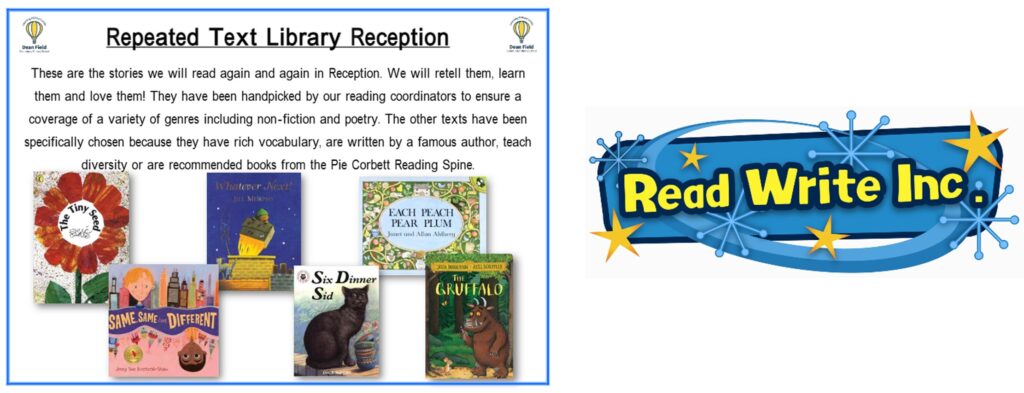
At Dean Field School, we believe that reading is the key to unlocking imagination, language, and confidence. In Reception, children benefit from our Repeated Text Library, a carefully curated collection of key stories that they revisit throughout the year. By returning to the same text multiple times, children build familiarity, deepen comprehension and develop a strong foundation in story language, structure and narrative patterns. Repeated exposure allows children to anticipate events, join in with refrains and retell stories with increasing independence and creativity. This approach not only strengthens vocabulary and listening skills but also helps children develop a love of stories that will continue as they progress through school. By the time children move into Key Stage 1, they have a rich repertoire of familiar texts to draw upon supporting both reading fluency and writing confidence.
Alongside this, children engage with Read Write Inc. phonics, which reinforces their decoding and comprehension skills, giving them the tools to tackle both familiar and new texts with confidence and enjoyment.
Children enjoy stories through role-play, multimedia, discussions and adult-led reading. Staff select a rich variety of texts to widen vocabulary and develop comprehension, while also following the children’s personal story preferences.
Word Aware
At Dean Field School, we use the Word Aware approach to support children’s communication and language development from the very start of their learning journey. Word Aware is a structured scheme that helps children learn Tier 2 and Tier 3 vocabulary by explicitly teaching new words, explaining their meanings, and giving children many opportunities to hear, use, and revisit them in different contexts. In Reception, vocabulary is carefully selected to link with each half-termly theme and is taught as a planned part of the literacy lesson, ensuring new words are meaningful and relevant to children’s learning. This is supported through high-quality stories, purposeful talk, visual prompts, and engaging activities. By breaking words down and linking them to actions, pictures, and real-life experiences, Word Aware helps children understand and use language with confidence. This strong foundation supports children’s listening, speaking, and understanding, enabling them to communicate effectively and access learning across the curriculum.
White Rose Maths
We follow the White Rose Maths programme, a highly respected approach that builds deep mathematical understanding through small, carefully sequenced steps. White Rose focuses on developing number sense, reasoning, early problem-solving and confidence with pattern, shape and measures. This approach ensures children gain secure foundations in maths that will support them all the way through school. Alongside White Rose, Reception children access Ten Town, which brings numbers to life through fun characters and stories. Every child receives a Ten Town login so they can continue learning at home.
Toothbrushing Programme
We run a daily toothbrushing programme to promote good oral hygiene and healthy habits. Each child has their own named toothbrush and takes part in supervised teeth cleaning each day. Through this routine, children learn the importance of caring for their teeth and developing independence and self-care skills from an early age.
Outdoor Learning
Our outdoor environment is a vibrant extension of the classroom, carefully planned to incorporate all seven EYFS areas of learning. Children have daily opportunities to develop gross motor skills, explore nature, engage in creative play, investigate early maths and literacy and grow in independence and confidence. This space allows children to take safe, supported risks, develop physical strength, collaborate with others and enjoy rich, meaningful learning experiences in the fresh air.
Indoor Learning
Our Reception classroom at Dean Field School are carefully organised into distinct learning zones, each designed to support the seven areas of the EYFS curriculum. This purposeful layout ensures that children have access to a wide variety of experiences which helps them develop independence, curiosity and a love of learning. Every area is thoughtfully resourced to encourage exploration, creativity and skill-building allowing children to engage deeply with their learning.
The indoor environment is designed to promote independence and choice. Children can move freely between areas, select activities that interest them, and take ownership of their learning. This approach encourages self-motivation, problem-solving, creativity, and resilience while ensuring every child has the opportunity to develop across all areas of the EYFS curriculum.
- Literacy Area:
This zone is rich with books, writing materials and mark-making opportunities. It encourages children to explore storytelling, phonics and early writing. By providing prompts, story sacks and familiar texts from our Repeated Text Library, children practise reading comprehension, vocabulary and imaginative expression. The area fosters confidence in reading and writing while helping children see themselves as capable communicators.

- Mathematics Area:
Equipped with counting resources, pattern blocks, measuring tools and problem-solving challenges, this area supports early numeracy and reasoning skills. Activities are linked to White Rose Maths giving children hands-on experiences with number, shape, pattern and measurement. By manipulating real objects, children develop mathematical understanding in a practical and engaging way which building foundations for future maths learning.
- Role-Play / Small World Area:
Imaginative spaces including small world sets and themed role-play corners, encourage social interaction, storytelling and problem-solving. Here, children develop Communication and Language, PSED and creative thinking. Role-play allows children to rehearse real-life situations, negotiate roles and build empathy: helping them develop essential social and emotional skills.
- Creative Arts Area:
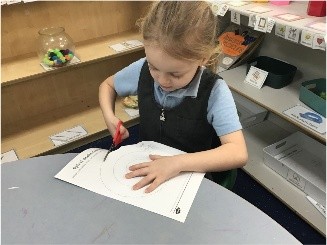
This zone provides opportunities for painting, collage, construction and model-making. This supports Expressive Arts and Design. Children can experiment with materials, test their ideas and express themselves visually. Engaging in creative activities develops fine motor skills, concentration, imagination and confidence while also encouraging collaboration and discussion.
- Construction and Engineering Area:
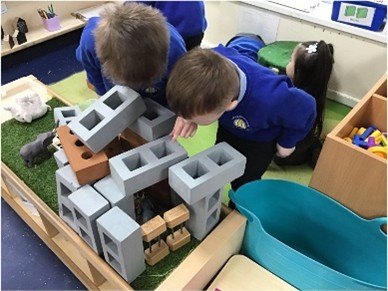
Here, children have access to blocks, magnetic sets and building kits. Large and small-scale construction encourages problem-solving, spatial reasoning and teamwork. It also allows children to explore early engineering concepts and experiment with cause-and-effect. This supports Mathematics, Physical Development, and Understanding the World in practical, hands-on ways.
- Sensory / Investigation Area:
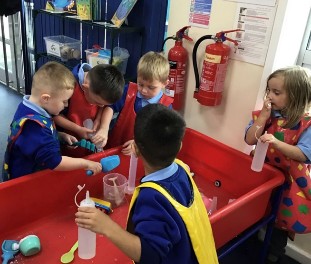
This zone is designed for exploration and discovery with sand, water, natural materials and science-based investigations. Children can experiment, observe and ask questions which supportsUnderstanding the World and scientific thinking. Sensory play also strengthens fine motor control and concentration making it an essential part of holistic development.
- Writing and Handwriting Area:
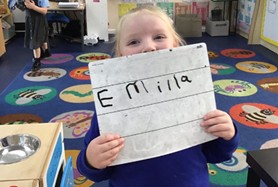
Alongside literacy, this space focuses on early transcription skills and handwriting practice. Resources include pencils, pens, chalk, whiteboards and tracing tools to develop fine motor skills and correct letter formation. Daily practice in this area ensures children build the foundations for confident, legible writing.
Specialist Lessons in Reception
At Dean Field School, Reception children enjoy a wide range of specialist lessons that complement their EYFS learning and develop key skills for life. These weekly sessions broaden children’s experiences, nurture curiosity and build confidence in new areas.
French:
Children have a weekly French session where children begin to develop basic language skills such as greetings, colours, numbers and simple songs. Through games, songs and interactive activities, children gain early exposure to a second language: fostering communication skills and cultural awareness in a fun and engaging way.
Computing:
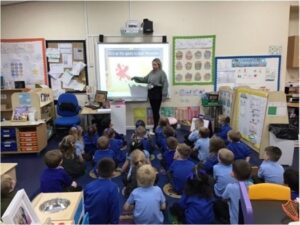
Weekly computing lessons form part of our Understanding the World curriculum introducing children to age-appropriate technology and digital tools. Children learn how to navigate simple software, develop mouse and keyboard skills and explore interactive learning platforms. Through these sessions, they are also taught how to use technology safely and responsibly including knowing when to ask an adult for help. These experiences support problem-solving, logical thinking and creativity, while helping children develop confidence and awareness of the digital world around them.
Executive Function Skills:
Reception children take part in activities designed to strengthen their executive function skills. These include working memory, self-control and cognitive flexibility. Through structured games, turn-taking, sequencing tasks and “memory challenges,” children learn to plan, focus and regulate their behaviour. We feel these are key skills that support success across all areas of learning.
Music:
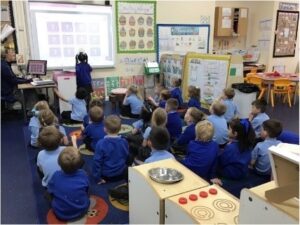
Weekly music sessions allow children to explore rhythm, pitch, instruments, singing and movement. Music develops creativity, listening skills and self-expression while also supporting coordination, concentration and memory. We follow the Kapow Music Scheme which aligns with KS1 and KS2. Children gain confidence performing individually and in groups, enjoying shared musical experiences that enrich their learning.
Jigsaw (PSHE):
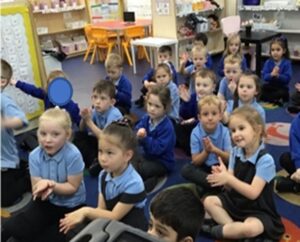
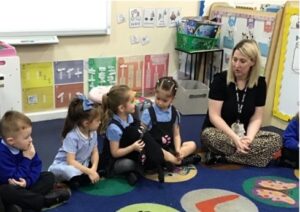
Through our Jigsaw lessons, children explore social, emotional and personal development. They learn about feelings, relationships, kindness, empathy and teamwork. These lessons provide strategies for self-regulation and problem-solving which helps children build resilience, confidence and positive relationships with peers and adults.
Physical Education (PE):
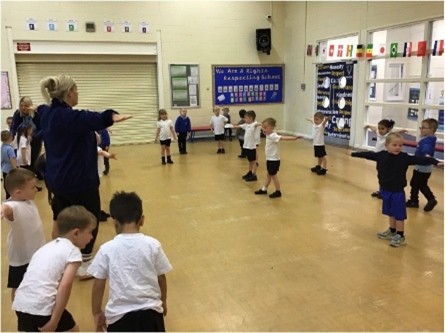
Reception children take part in structured weekly PE sessions following the Get Set 4 PE programme which links into KS1 and KS2 They develop gross motor skills, coordination, balance and fitness. Activities include running, jumping, throwing, catching and basic team games. These are delivered in a safe and supportive environment. Outdoor play and PE together help children grow in confidence, strength and agility while enjoying the benefits of regular physical activity.

Dingley’s Promise
Dean Field is proud to hold the Dingley’s Promise Award, which reflects our strong commitment to inclusion and high-quality Early Years practice. This award supports our aim to ensure that every child in Reception feels valued, supported and able to thrive from the very start of their school journey.
For our Reception children, the Dingley’s Promise Award means:
- A welcoming, inclusive environment where every child’s needs are recognised and respected
- Early identification and support for children who may need additional help with learning, communication or emotional development
- Increased confidence, independence and a sense of belonging within the classroom
- Teaching approaches that are flexible and responsive, allowing all children to access learning successfully
The award also has a significant impact on the practice of our Early Years staff. Through the Dingley’s Promise framework, staff are supported to:
- Develop a deeper understanding of inclusive Early Years provision
- Reflect on and strengthen classroom practice to meet the needs of all learners
- Use observation and assessment effectively to inform next steps
- Work collaboratively with families and outside professionals to ensure the best outcomes for children
Holding the Dingley’s Promise Award reinforces our belief that inclusive practice benefits every child, not just those with additional needs. It ensures that our Reception provision is nurturing, responsive and built on strong foundations, giving all children the best possible start to their learning journey.
Transition to Year 1 and Beyond
We prepare children carefully for the transition to Year 1 by placing strong emphasis on foundational skills and knowledge, including early reading, writing, maths, communication and independence. Alongside academic learning, we support children to develop their social and emotional skills such as resilience, confidence, self-regulation and positive relationships so they are ready for the increased expectations of school life. Assessment information is shared with the Year 1 teacher and children are involved in whole-school experiences to help them feel familiar, secure and confident. By the time children leave Reception, they are well prepared for the demands of the National Curriculum and ready to begin Year 1 with enthusiasm and confidence.