Geography Curriculum Intent
Geography is the study of places and the relationships between people and their environments. When children join our school, we intend for them to embark upon a learning journey which will develop their geographical capital and to develop an understanding of our world through experience and investigation. We intend to inspire curiosity and fascination about the world and its people that will remain with them for the rest of their lives and equip pupils with knowledge about diverse places, people, resources and natural and human environments, together with an understanding of the Earth’s key human and physical processes.
As pupils progress, their growing knowledge about the world should help them to deepen their understanding of the interaction between human and physical processes, and of the formation and use of landscapes and environments. Pupils should develop their understanding of how the Earth’s features at different scales are shaped, interconnected and change over time.
The curriculum enables our learners to be confident to understand, ask questions and develop a responsible attitude towards the world around them. It is concerned with the lives of real people in a real world with real events, both past and present.

Aims for pupils
Through our teaching of geography we aim to:
- stimulate children’s interest and curiosity about their surroundings
- facilitate children in developing a knowledge and understanding of the human and physical processes which shape places.
- enable children to gain knowledge and understanding of places in our changing world, gain a greater understanding of the ways of life and cultures of people in other places and help pupils to make sense of their own surroundings through learning about their own locality and the interaction between people and the environment.
- develop pupils’ competence in specific disciplinary knowledge of: collecting, analysing and interpreting data through fieldwork; interpreting maps, diagrams, globes and aerial photographs, communicating geographical information in a variety of ways, evaluating and debating ideas and the impact of processes, phenomena and humans on the world
- provide opportunities for children to develop the vocabulary necessary to ask questions and develop research skills in order to evaluate opinions and propose solutions

How our Geography Curriculum Is Constructed
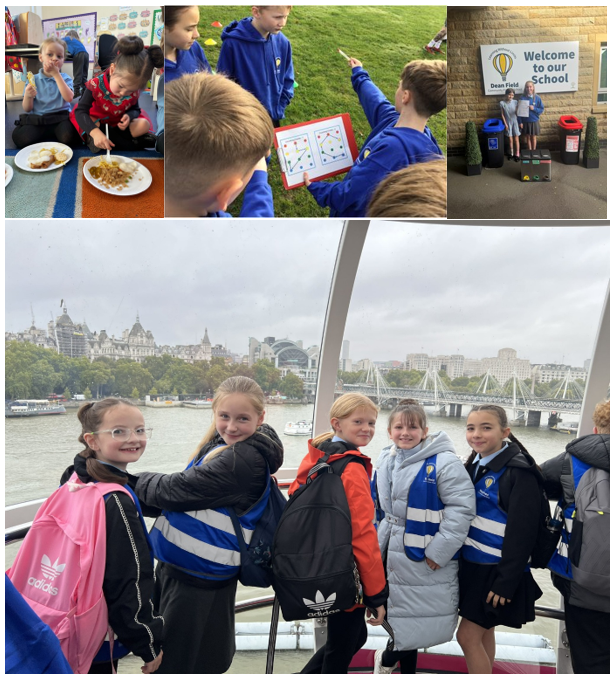
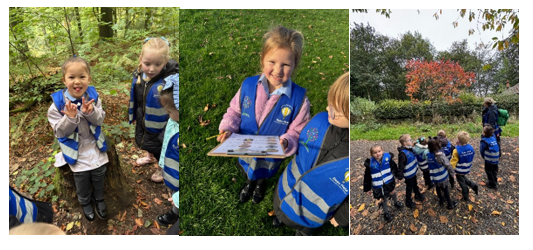
In the Early Years Foundation Stage (EYFS), geography is introduced through the Understanding the World area of learning, which encourages children to explore, observe, and make sense of their surroundings. The curriculum is designed to develop children’s awareness of places, people, and the environment through hands-on experiences and meaningful play. Children learn about their immediate environment such as their home, school, and local area and begin to notice similarities and differences between places. Through activities like nature walks, map play, discussions about weather and exploring different cultures and communities, children start to build the foundational skills of geographical thinking. This approach allows them to develop curiosity, observation skills, and an early sense of how people and places are connected in the wider world.
For years 1 – 6, we follow the National Curriculum as defined by the Department of Education. In year 1, where pupils learn the component location knowledge of their local area, the UK, such as the names of the countries, capital cities and key human features. In Year 5 and 6, this culminates in the development of rich geography scheme, encompassing, for example, a deep understanding of Trade and Resources, biomes and Europe.
The Geography curriculum is underpinned by providing our children with wider opportunities, independent learning and basic skills.
Geography is taught through a topical theme in specific half terms throughout the year. These themes have been established to ensure that chronological understanding is sequenced, relevant and can support children in building upon prior learning. A body of key knowledge in the form of ‘Must Know Facts’ is established for each historical topic. The unit is planned in a way so that these facts are recapped and revisited to encourage retention. Lessons are then planned against a progressive set of historical skills taken from our in-house progression document.
Geography Must Knows
Below, are a selection of the Must Knows that we provide for each year group, for each Geography topic covered. These Must Knows are designed to be used at home by parents as part of homework and revision, in school to supplement work in lessons and to recap previous learning. We want every pupil to be able to recall the facts given on the sheet but also to research further into the information provided. These are carefully structured so that knowledge and vocabulary are sequenced and built upon over time. We are confident that these Must Knows will help our children to develop and retain key knowledge on a wide range of topics and will significantly improve their vocabulary.
A full range of Geography Must Knows can be found on each class’ Seesaw account.
Enriching Opportunities and Experiences
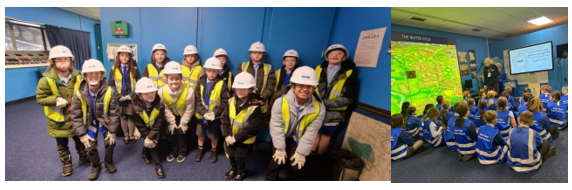
Geography linked to Poetry

Applied Creativity Lab
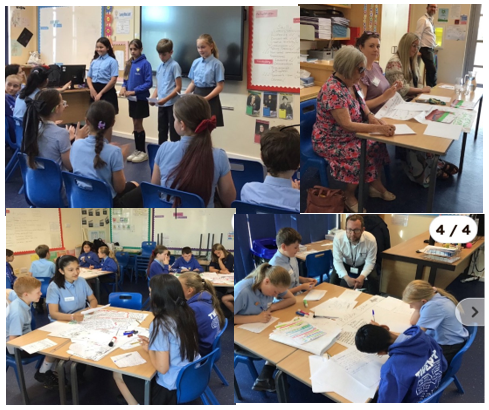
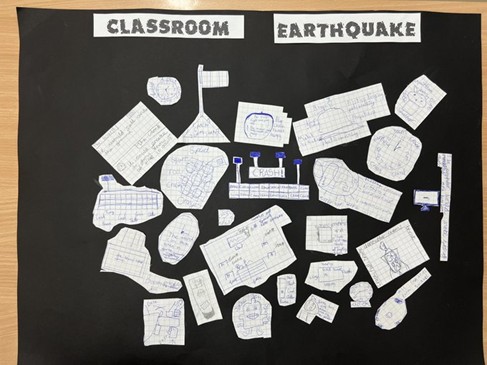
Applied Creativity Labs focus on real world challenges, such as air IVE pollution, food sustainability, well-being initiatives, transportation streamlining, school-improvement drives and promotion transferable skills. Applied Creativity Labs are for young people in schools and/or youth groups.
Some of our Upper Key Stage 2 children have been fortunate enough to work with IVE on an Applied Creativity Lab Programme looking at innovative and creative ways to tackle air pollution Pupils presented their creative ideas to a representative from Suma Wholefoods and Stephanie Clark, Labour Councillor for Illingworth and Mixenden